

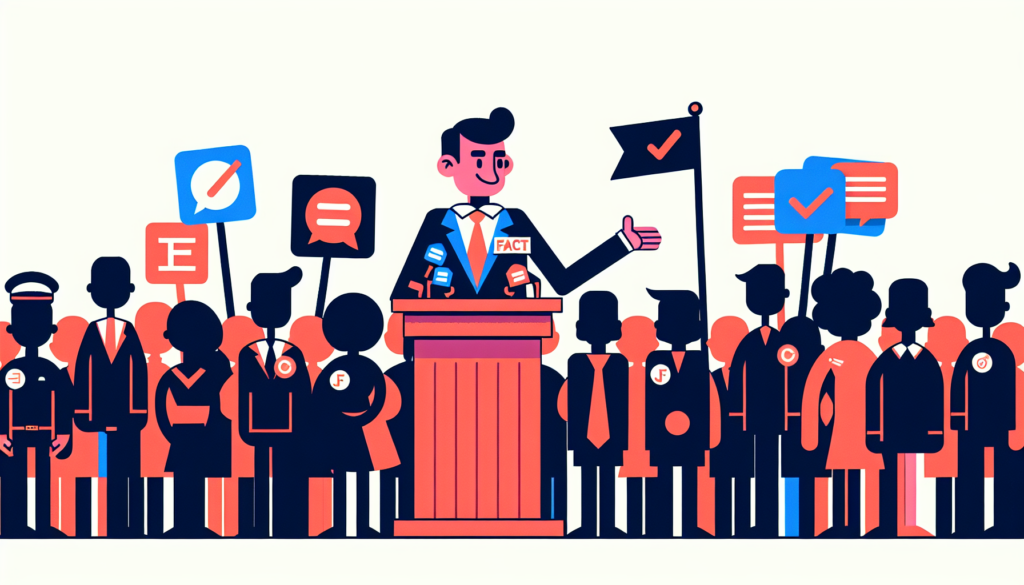
The Situation
You watch a politician give a speech and something feels off. You fact-check it — they were wrong, or misleading, or flatly untrue. Then they do it again next week. And so does the other party. It’s not new, it’s not one country, and it doesn’t seem to matter who gets elected. I don’t get it.
The AI Analysis
Politicians aren’t necessarily more dishonest than other people — but they operate in a system that frequently rewards deception over honesty. Here’s why it keeps happening:
- The incentive structure punishes honesty — Admitting uncertainty, reversing a position, or giving a nuanced answer is consistently weaponized by opponents and ridiculed by media. Confident simplicity wins votes. Careful truth-telling often doesn’t.
- Most political “lies” aren’t black and white — The spectrum runs from outright falsehoods all the way to misleading statistics, strategic omissions, selective framing, and wishful projection. Politicians become expert at staying technically defensible while being functionally deceptive.
- Different audiences hear different things — In a fragmented media environment, a politician can say contradictory things to different audiences with little accountability, because those audiences rarely compare notes.
- Motivated reasoning fills the gaps — Many politicians convince themselves their distortions are justified — that the stakes are too high for inconvenient truth, or that their opponent would do worse. The self-deception is often genuine.
- Voters play a role too — Research consistently shows that people prefer information confirming what they already believe. Politicians who tell hard truths often lose to those who tell comfortable ones.
The Takeaway
Politicians lie at the rate they do not because they are uniquely immoral, but because the system they operate in frequently makes honesty a liability. The fix isn’t just electing better people — it’s changing the incentives. That means demanding nuance, tolerating changed minds, and punishing spin regardless of which side it comes from. What do you think is the real reason?