

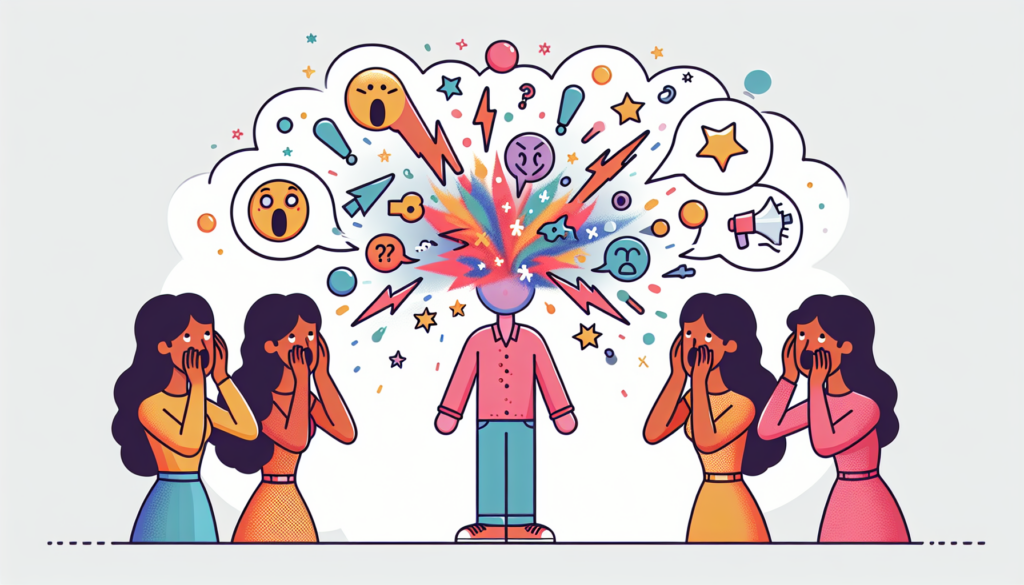
The Situation
You’re in a public place — a store, a restaurant, a bus — and someone nearby is dropping profanity like punctuation. Or you notice that language which once would have shocked people has become completely unremarkable in everyday conversation. It’s in movies, on social media, at the office. When did this become normal, and why do people talk this way? I don’t get it.
The AI Analysis
Swearing isn’t random or purely a sign of poor manners — it serves real psychological and social functions that explain why it persists across every culture and language.
- Profanity is processed differently in the brain — Swear words activate the amygdala, the brain’s emotional center, in a way that ordinary language doesn’t. That’s why they feel more intense and urgent — they literally are, neurologically speaking.
- Swearing under stress actually helps — Multiple studies have found that swearing increases pain tolerance and endurance. People who swear after stubbing a toe genuinely feel less pain than those who use neutral words. The emotional charge of the word provides a real physiological release.
- It signals authenticity and group membership — Among friends, profanity communicates informality, trust, and genuine emotion. Using formal language in close relationships can feel stilted or cold. Swearing is often a way of saying: I’m being real with you.
- Media has steadily shifted the baseline — Decades of film, music, television, and now social media have gradually normalized language that once appeared only in private. Each generation grows up with a slightly shifted sense of what’s unremarkable to hear in public.
- Context is almost everything — The same word that would end a career in one setting is completely unremarkable in another. The perception of vulgarity is less about the word and more about whether it fits the social context.
- For some, it’s a habit without a filter — Not everyone has developed or consistently applies the social awareness to adjust their language to their audience. What feels natural in one environment gets carried unreflectively into others.
The Takeaway
Vulgar language persists because it works — it carries emotional weight that polished language often can’t match, provides genuine stress relief, and signals authenticity in the right company. Whether it’s appropriate is almost entirely a context question rather than a moral one. The same word that’s jarring at a dinner table is unremarkable among close friends. The real issue isn’t the language — it’s the awareness of when and where it lands. What’s your take on why people swear?