
The Situation
Walk down any street and you’ll see them — cracks running across the sidewalk in every direction. Some are thin hairlines. Some are wide enough to catch a bicycle tire. They’re on new sidewalks and old ones, in hot climates and cold ones. Nobody seems to fix them. They just… keep being there. I don’t get it.
The AI Analysis
Here’s the thing: many of those lines aren’t accidents. And the ones that are have very predictable causes.
- Some cracks are intentional — Look closely at a sidewalk and you’ll notice two kinds of lines: ragged, irregular cracks, and clean, straight grooves cut across the concrete at regular intervals. Those straight ones are called control joints or expansion joints, and they’re put there on purpose. Engineers deliberately weaken the concrete along those lines so that when cracking happens — and it always happens — it happens in a controlled, predictable place rather than randomly across the slab.
- Concrete expands and contracts constantly — Temperature changes cause concrete to expand in heat and contract in cold. Over years of daily and seasonal cycling, that repeated movement creates stress. Something has to give, and concrete gives by cracking.
- The freeze-thaw cycle is especially destructive — Water seeps into tiny pores in concrete, freezes, expands by about 9%, and forces the crack wider. Come spring, the ice melts, contracts, and leaves a slightly bigger gap for next winter. Repeat for decades.
- The ground beneath isn’t as solid as it looks — Soil shifts, settles, washes out, and compresses unevenly under the weight of a concrete slab. When the ground moves, the rigid slab above it cracks to compensate.
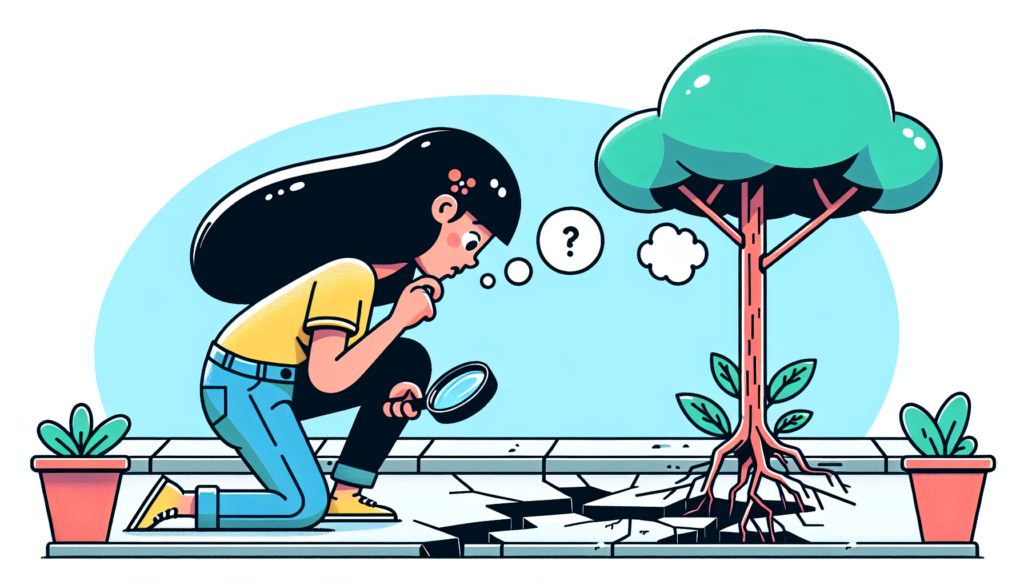
- Tree roots are quiet engineers — A tree root growing beneath a sidewalk exerts enormous upward pressure over years, eventually buckling or cracking slabs that weigh hundreds of pounds.
The Takeaway
Sidewalk cracks are part physics, part engineering, and part inevitability. Concrete is rigid in a world that isn’t — the ground shifts, temperatures swing, roots grow, and water freezes. The straight lines you step over aren’t failures; they’re engineers admitting that cracking is guaranteed and designing around it. The jagged ones are just the concrete deciding for itself where it’s going to give. Did you know some sidewalk cracks are intentional?